
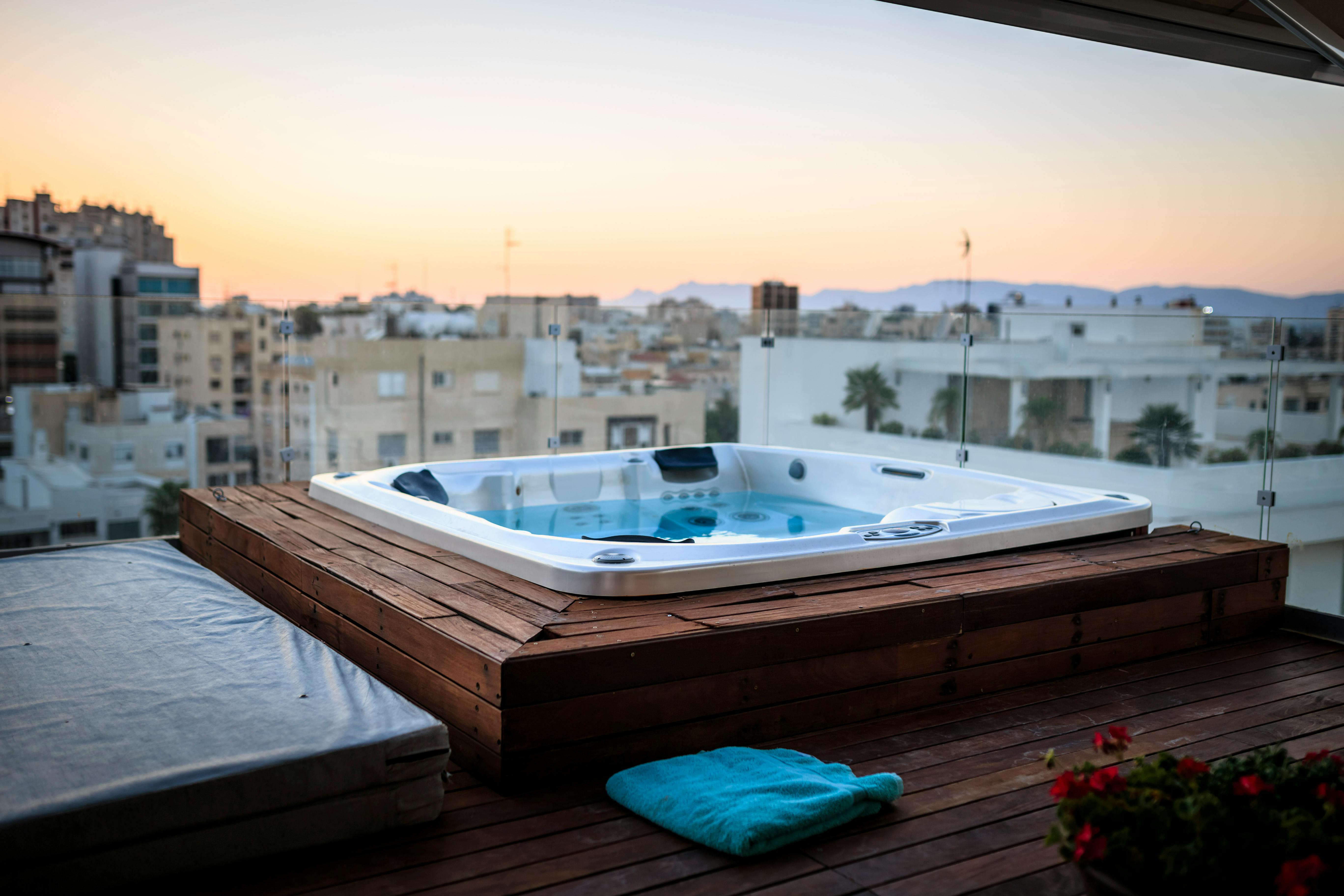
Adding a hot tub to a Portland patio can transform an ordinary outdoor space into a year-round retreat. With the region’s cool, rainy climate, a well-installed tub offers a soothing escape after a long day and adds considerable value to a home. This guide walks homeowners through every stage of the process, from site selection and permits to plumbing, electrical work, and final finishing, so the installation proceeds smoothly, safely, and in compliance with local building codes.
1. Planning and Site Selection
Assessing Space and Layout
- Measure the available patio area, leaving at least 3-4 feet of clearance around the tub for maintenance and safety.
- Consider the tub’s dimensions, typical models range from 6-ft to 9-ft in length.
- Check for obstacles such as low-lying trees, overhead power lines, or uneven surfaces.
Evaluating Load-Bearing Capacity
- Portland homes often sit on slab foundations; verify that the concrete can support the tub’s weight when filled (approximately 500-800″?lb).
- If the patio is a deck, consult a structural engineer to confirm reinforcement.
- Reinforced decking or a concrete pad may be required for added stability.
Permits and Regulations
Before any digging begins, contact the City of Portland’s Building Services to determine required permits. Most installations need a plumbing permit and an electrical permit for the heater and lighting. Detailed guidelines are available on the official municipal website, and local professionals can help streamline the approval process.
2. Choosing the Right Hot Tub
- Material: Acrylic offers durability and easy cleaning; wood provides a natural aesthetic but requires more maintenance.
- Heating System: Electric heaters are common in Portland due to reliable grid power, while gas heaters are an option for larger, insulated models.
- Insulation: Look for high-R-value covers and built-in insulation to reduce heat loss during the cooler months.
- Features: Jets, LED lighting, and Bluetooth controls enhance the experience but increase installation complexity.
For a curated selection of models suited to the Pacific Northwest climate, Discover expert strategies here and compare specifications that align with your patio dimensions.
3. Preparing the Patio
Ground Preparation
- Excavate the area to a depth of 6-8 inches, ensuring a level base.
- Lay a compacted gravel layer (??-inch crushed stone) for drainage.
- Install a concrete slab with a minimum thickness of 4 inches, reinforced with rebar for added strength.
Utility Routing
- Plan plumbing runs for water supply and drainage, keeping pipes at least 12 inches below the slab to protect against freezing.
- Route electrical conduit for the heater, pump, and lighting, adhering to NEC (National Electrical Code) standards.
- Use a dedicated 240-V circuit with a GFCI breaker for safety.
Guidance on proper utility placement can be found in the detailed resource Learn about our tailored solutions, which outlines code-compliant pathways for Portland homes.
4. Installation Steps
Positioning the Tub
- Carefully lower the hot tub onto the prepared slab using a crane or a team of helpers.
- Check levelness with a bubble level; adjust shims under the base if necessary.
- Secure the tub to the slab with anchor bolts as recommended by the manufacturer.
Plumbing Connections
- Connect the inlet and outlet hoses to the water supply and drain, using PVC fittings rated for hot water.
- Install a check valve to prevent backflow and a pressure-relief valve for safety.
- Test the system for leaks before proceeding to electrical work.
Electrical Hook-up
- Run the conduit from the dedicated circuit breaker to the tub’s control box.
- Follow the manufacturer’s wiring diagram, connecting the heater, pump, and lighting circuits.
- Have a licensed electrician perform a final inspection and certify the installation.
For a step-by-step visual walkthrough, Explore advanced guides and tips that include diagrams specific to Portland’s climate considerations.
5. Finishing Touches and Maintenance
- Cover Selection: Invest in a high-quality insulated cover to retain heat and protect against rain.
- Water Treatment: Use a balanced chemical regimen, chlorine or bromine, pH adjusters, and shock treatments, to keep water clear.
- Seasonal Care: Drain and store the tub or use a winterization kit if the tub will be idle for extended periods.
- Safety Features: Install non-slip mats, handrails, and motion-sensor lighting for nighttime use.
Additional maintenance schedules and product recommendations are available at Find out more about this approach, ensuring the hot tub remains reliable for years.
6. Hiring Professionals vs. DIY
While many homeowners enjoy the satisfaction of a DIY project, hot tub installation involves specialized skills, especially for electrical and plumbing work. Engaging a certified installer can:
- Guarantee compliance with local building codes.
- Provide warranty protection that may be voided by improper installation.
- Save time through efficient coordination of trades.
Portland’s pool and spa specialists, listed on reputable directories, often offer free site assessments and detailed quotes. Reviewing these proposals can help you compare service levels and select a partner that aligns with your budget and timeline.
Conclusion
Installing a patio hot tub in a Portland home is a rewarding project that blends comfort, value, and aesthetic appeal. By carefully planning the site, selecting the right model, adhering to permitting requirements, and following precise installation steps, homeowners can enjoy a seamless integration of relaxation into their outdoor living space. Whether tackling the project independently or partnering with seasoned professionals, the resources linked throughout this guide provide the expertise needed to achieve a safe, efficient, and enjoyable hot-tub experience.
